We rely on AI tools and technologies for every task in 2026, but we never noticed when ChatGPT became our go-to friend for suggestions and ideas. It was the first Gen AI tool that truly captured our attention. How can we forget when people were sharing screenshots of their chats with ChatGPT over social media, and it went viral? Everyone was busy asking questions, brainstorming ideas, or seeking advice, but behind the scenes ChatGPT was learning and improving with every interaction. But it was not the only one in the Gene AI race because Google Gemini and Claude also made sure we remember them. These AI tools offered us multiple AI features, and Gen AI took all the spotlight within hours.
People were talking about how “technology will change everything” and “the future is already here” everywhere we used to look. Many others were also quite hesitant about this technology due to privacy concerns. But we have to accept the fact that the massive use of AI and its use in every field makes us believe that it’s not a threat. Companies started using these tools to write content, design visuals, fix code, and even chat with customers. ChatGPT has around 800 million weekly active users as of 2025, and 34 % of adults say they’ve used ChatGPT in the United States.
But these smart tools still had a few limits despite the hype. They used to work and provide answers on the basis of prompts and trained data. They were unable to think, make plans, or take action on their own without our help. But the concept of Agentic AI has changed everything. Agentic AI doesn’t just generate content on our command, but it acts, decides, and executes tasks autonomously. According to Gartner’s study, at least 15 percent of daily work decisions will be made using agentic AI by 2028, and this is a big change in the AI industry.
How does Gen AI differ from Agentic AI? Is the hype around Agentic AI real or not? Are Agentic AI tools available to use in 2025? There are multiple questions roaming around in the market. Therefore, we have compiled a detailed blog about Agentic AI. We will discuss how it differs from gen AI and how it is going to benefit in detail.
Generative AI to Agentic AI
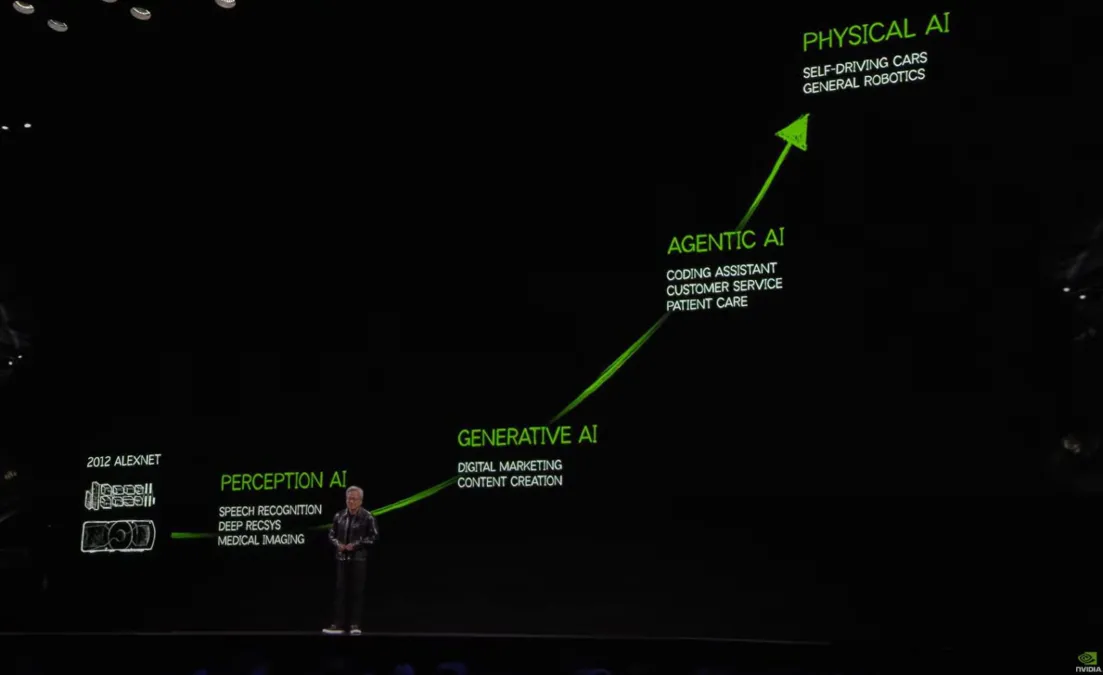
Generative AI has made our work and personal lives way easier than before, but it all began with the launch of ChatGPT. OpenAI launched it in November 2022, and it quickly became our helping tool. We used it for chatting, writing emails, making suggestions, and even for summaries. But many tech giants joined the race soon after its launch. Google launched Gemini, and Anthropic introduced Claude against ChatGPT. This “Generative AI wave” spread like wildfire across the world between 2022 and 2024. Millions of people started using these tools, and they broke all the records.
But still there was room for improvement because they had one limitation of prompts. We were in need of a tool that could take action instead of just telling us, and that’s when researchers started talking about Agentic AI. The phrase “agentic AI” (or “AI agents”) first started to come out in the early 2020s, and AutoGPT was one of the first public examples of this concept. AutoGPT was launched in March 2023, and it was able to break down the complex tasks into smaller steps with minimal human input. It was the time when ChatGPT and Google Gemini were competing against each other.
But the global interest starts to shift more towards Agentic AI by 2024. Tech giants felt the threat, and OpenAI started introducing true agentic features into ChatGPT. ChatGPT can now take multi-step actions, browse the web, and even handle tasks like booking appointments or managing files without constant guidance. But it’s just the beginning. Agentic AI is a far bigger thing than just these features in ChatGPT. As Brown said.
Many people don’t understand the impact. Some still think it’s just another tool. But agentic AI will bring a fundamental change in how we operate. It will create new ways of working.
What is Agentic AI?
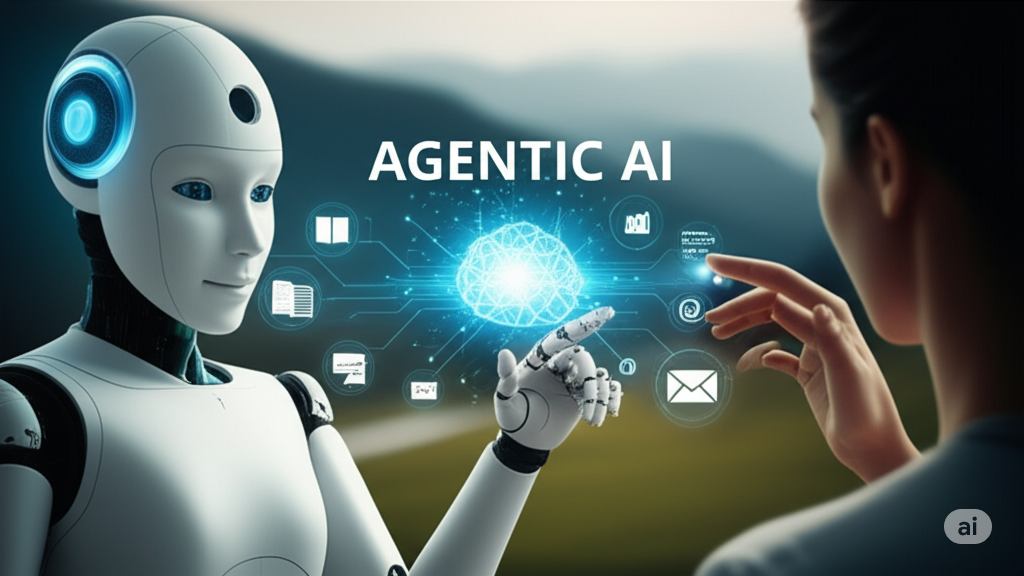
We type our thoughts into ChatGPT every minute to find an accurate answer. But what if we didn’t have to tell it every single step? What if it could figure things out, plan what to do next, and get it done for us? Although it was difficult back then with Gen AI, Agentic AI has made it easy for us. Agentic AI can plan, decide, and act for itself to provide final results. It does not wait for us to ask something, but it automatically generates answers according to the query.
According to IBM,
Agentic AI is an artificial intelligence system that can accomplish a specific goal with limited supervision.
Amazon Web Services (AWS) is an autonomous AI system that can act independently to achieve pre-determined goals.
Agentic AI has autonomy and reasoning abilities. It provides a detailed answer for our simple query with a septic reason. It interacts with apps, APIs, external software, or even hardware environments. It acts more like us, and this is the main reason that it is getting attention. Every tech company is upgrading its tools for agentic AI. OpenAI has recently introduced agent-type features in ChatGPT. But the best part is a new “Tasks” feature that allows us to schedule reminders.
Goodwyn said,
The idea of agents is not new; we’ve been working on this for a while. But the reason why it’s getting so much attention now is because large language models and generative AI accelerated some of the characteristics agentic AI needs to be successful.
OpenAI has also announced ChatGPT Agent in July 2025, to handle complex, multi-step jobs. But this was just the beginning, as they have also dropped the Agent AI recently on October 6, 2025. Altman said. “It’s built on top of the responses API that hundreds of thousands of developers already use.” Meta is also working on embodied agentic AI, and Google is also not getting out of the race. They are working on Gemini Robotics with Agentic AI features. According to Gartner’s study, around 15% of everyday business decisions will be automated with agentic AI by 2028. It is up from 0% in 2024. They also estimated that about one-third of enterprise software tools will include agentic AI features compared to less than 1% just a few years ago.
The Verge says that:
The rise of ‘agentic’ AI in 2025 isn’t just about technological advancement, it’s about economics.
How Does Agentic AI Work?
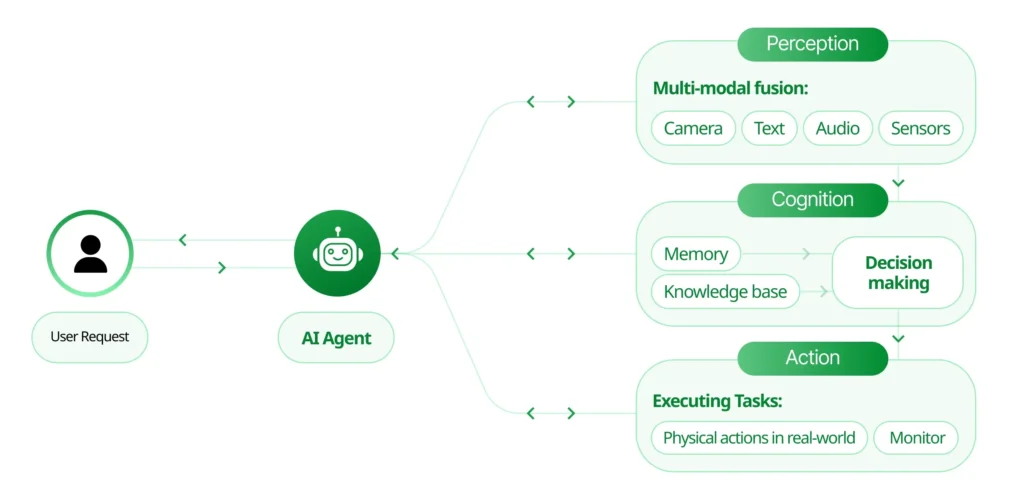
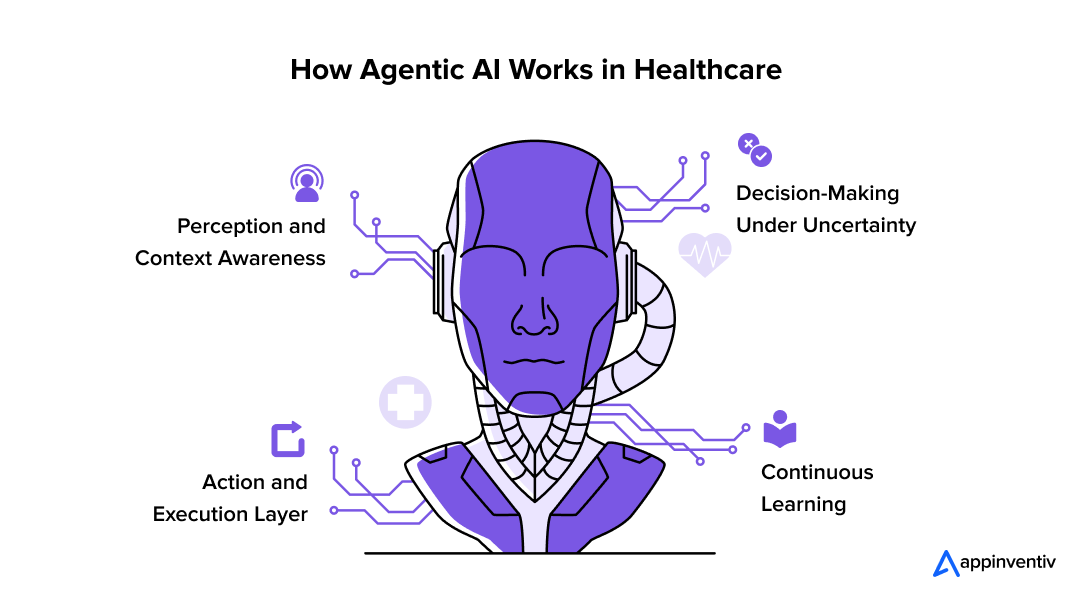
Agentic AI does not just answer the query without any reasoning or logic. It takes action, uses tools, and learns from what happens. Agentic AI follows a step-by-step process to solve problems and continuously improve over time. It starts collecting data at first. It checks our calendar, pulls up files, accesses databases, scans websites, or reads sensor inputs. It understands our query first and figures out what it needs to know. For example, when we say, “Organize a 2-hour brainstorming session next week for our marketing team, and send a follow-up summary”. It perceives and checks our calendar and the team’s availability. The Agentic AI plans what it should do itself after collecting information. It breaks down big goals into smaller tasks, figures out priorities, and charts a plan of action. This planning involves picking a date, booking a room, and inviting people for a brainstorming session. It uses APIs, apps, and automation tools to execute the plan. It means it sends invites, books a meeting room, creates an agenda document, and reminds the team of the meeting. The system checks if the action was successful or not. It updates its memory or strategy so it can perform better next time if the action goes wrong. But Agentic AI is still an AI tool, so safety is important when making payments or booking tickets. It helps to ensure that the agent doesn’t go off track.
Senior Director Analyst in the Gartner Customer Service & Support Practice said.
Unlike traditional GenAI tools that simply assist users with information, agentic AI will proactively resolve service requests on behalf of customers, marking a new era in customer engagement.
How Does Agentic AI Differ From Generative AI?
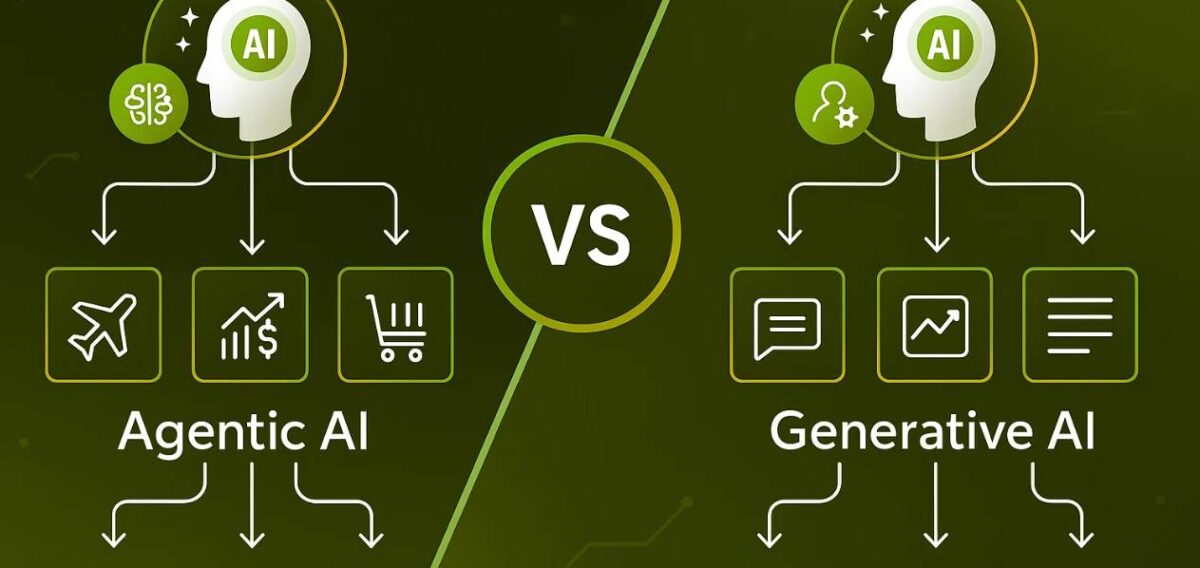
Generative AI and Agentic AI sound similar at first, but they provide different responses when we ask one question. Generative AI focuses on creating content, text, code, and designs based on our prompts. For example, when we use ChatGPT to get summaries and DALL·E to make an image. These tools figure out which information best fits our request and give a helpful response.
But Agentic AI is different from Gen AI. It plans, decides, and acts on its own to reach a final decision instead of just replying to your prompt. We don’t have to tell it every single step. When we ask it to plan a marketing campaign for our new product. A generative model writes only a campaign outline, but an agentic system researches competitors, creates ads, schedules posts, and even tracks results automatically.
Daniel O’Sullivan said,
Agentic AI has emerged as a game-changer for customer service, paving the way for autonomous and low-effort customer experiences.
Generative AI focuses on creating answers, and Agentic AI focuses on getting things done. According to IBM, AI is moving from giving one-time answers to giving goal-specific answers.
Applications of Agentic AI
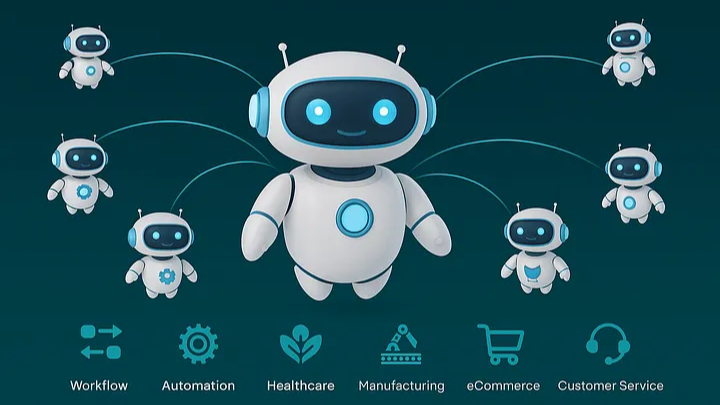
Agentic AI isn’t just a futuristic idea because many businesses and companies are already adopting it. This new generation of AI is impacting every industry from health to customer care and cybersecurity. Here are the examples and application areas in which Agentic AI is making headlines.
1. Risk Reduction and Security
Security and risk reduction are one of our main concerns when we work online. But Agentic AI is making big promises. It monitors threats, makes decisions, and takes action automatically before those threats become a problem.
Agentic AI is not like Gen AI, which simply generates reports and alerts. But they continuously scan logs and network traffic to identify anomalies like malware or unauthorized access. It helps organizations to act faster and protect themselves from scams. According to Risk Management Magazine reports, 29% of the1,650 surveyed organizations are already using agentic AI tools, and 44% plan to implement them within the next year.
These stats show that agentic AI is moving out of the labs into our real lives. But with ease comes the responsibility. Agentic AI tools make independent decisions that can be harmful when the system faces errors. It still requires human observation and permission for sensitive tasks (payments) to avoid incidents.
2. Customer Service
We all have waited on hold, repeated our issue to multiple agents, or tried to find an answer in the customer service. It used to frustrate us when the agents used to miss our calls or didn’t have any answers for our queries, but Agentic AI “gets the answer faster and serves the customer faster.” The agentic system identifies our issue, pulls our order history, reschedules our appointment, and sends confirmation instead of just giving us a link.
Brown said,
Agentic AI can proactively serve customers at a level that human employees or even traditional AI generally cannot.
But businesses are not relying on this system without any solid facts. TeleConnect used an agentic AI system and found that it handled about 70% of customer questions automatically. It also made replies much faster, with the average wait time to just 2 minutes, and increased customer satisfaction by almost 50%. These stats are not going to slow down even in the coming years. A Gartner study shows that agentic AI will be able to resolve around 80% of common customer-service issues by 2029. They added that it will cut the operational costs by about 30%.
O’Sullivan said,
As customers increasingly leverage agentic AI-powered agents to initiate, manage, and negotiate service requests on their behalf, service teams must adapt to this transformative shift.
3. Healthcare Operations
We used to spend hours filling the forms and getting an appointment, but agentic AI is solving that problem. Agentic AI manages patient intake and staff assignments in hospitals and clinics. It reviews last week’s data, balances workloads, and predicts peak demand. Researchers at Mass General Brigham have recently built an advanced agentic AI system to identify and rate levels of cognitive impairment in patients. This system has made it easy to detect the disease.
A recent survey found that 55% of healthcare organizations are already using Agentic AI tools for patient scheduling and waitlist management, 47% for pharmacy blocks, and 37% in cancer services. But this is just the beginning because the global market for agentic AI in healthcare was valued at around USD $538.5 million in 2024, and it is expected to grow to nearly USD $4.96 billion by 2030. These stats show that agentic AI is going to change the healthcare market more than any other.
4. Supply Chains and Logistics
We have all faced the frustration of waiting for a delayed package or hearing “your order is on the way” when it’s clearly not. This happens because supply chains are complex behind the scenes, and one small delay at a warehouse disrupts the flow. But agentic AI is making big changes in the supply chain and logistics industry.
Companies can predict disruptions, reroute shipments automatically, and manage inventory without waiting for human input with agentic AI. It acts like a smart logistics manager and handles everything. According to a 2025 McKinsey report, businesses that use autonomous and agentic AI tools in logistics have reduced operating costs by up to 20% and improved delivery speed by 35%. Apart from these, DHL is also testing agentic systems to optimize warehouse operations, and Amazon is using them to control warehouse robots and organize inventory. This adoption rate shows that agentic AI will optimize the supply chain over time.
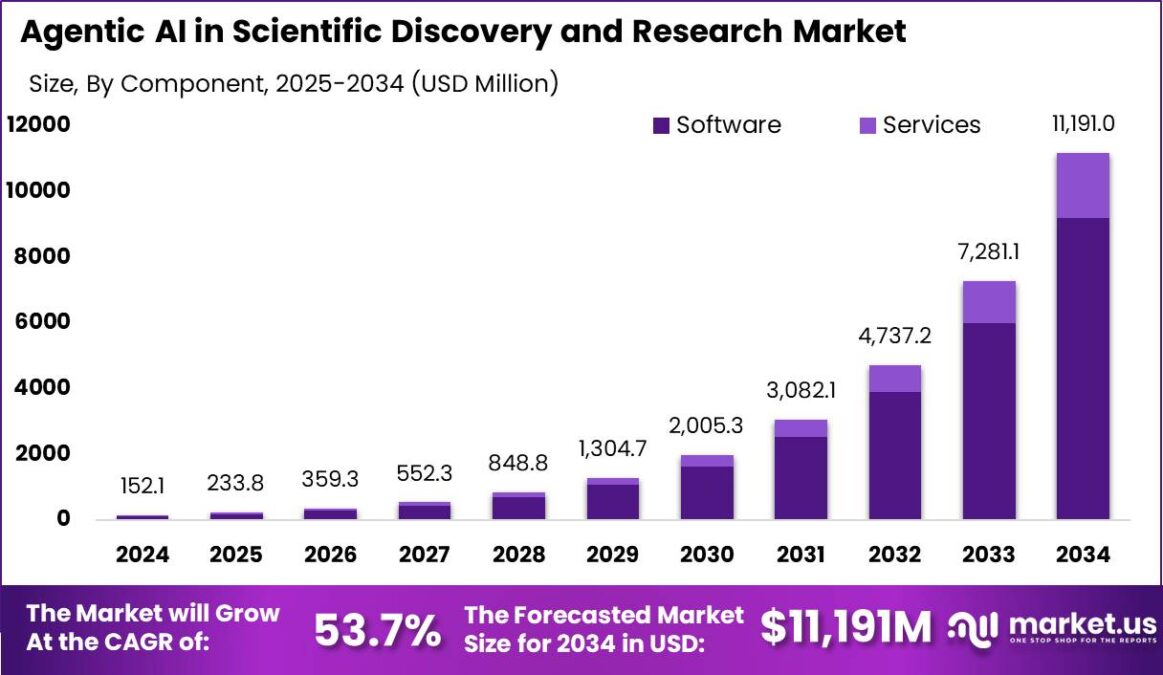
5. Scientific and Materials Discovery
Scientific research takes months or even years of testing before it finds something. Although the process is slow, agentic AI is promising to speed it up. These AI systems plan experiments, analyze results, and suggest the next steps in research. Scientists at Lawrence Berkeley National Laboratory are using agentic AI to automate materials discovery and for the identification of new compounds for better batteries and solar cells.
Likewise, Google DeepMind’s “GNoME” project used AI to predict over 2 million new crystal structures. It means we can invent better technology faster.
Panetta said.
Of course, other technologies, including machine learning and non-agentic AI, have been used in these areas for decades, but agentic AI works on a much higher level.
He added,
Agentic AI is smart enough to say, ‘This is what I know, and based on these materials and my exploration, here’s the new material or combination.
But the best thing is that these Agentic AI can also identify the optimal suppliers based on priorities such as cost or timing, and even order necessary materials. They reduce research time by up to 80% and increase accuracy in experiment planning by nearly 40%. So the agentic AI made the discoveries that once took years happen in months, or even weeks.
Why 40% of the Agentic AI Projects Will be Canceled?
There are predictions and rumors that 40% of the agentic AI projects will be cancelled by 2027. Many are asking why this might happen. But the main reasons behind all of this rising costs, unclear business value, and a lack of proper risk controls. According to Anushree Verma, Senior Director Analyst at Gartner, many of these projects are simply not ready for practical use yet. She explained,
Most agentic AI projects right now are early-stage experiments or proof of concepts that are mostly driven by hype and are often misapplied. This can blind organizations to the real cost and complexity of deploying AI agents at scale.
Her statement highlights that agentic AI is still in its early stages, and investors should proceed carefully. But many companies are rushing in without understanding what true agentic capabilities actually involve. According to a Gartner survey from January 2025 (with 3,412 professionals), only 19% of companies had made big investments in agentic AI. Whereas 42% were moving slowly, and 31% were still just watching to see how things went. This proves that most businesses are still uncertain about where agentic AI fits into their long-term strategy.
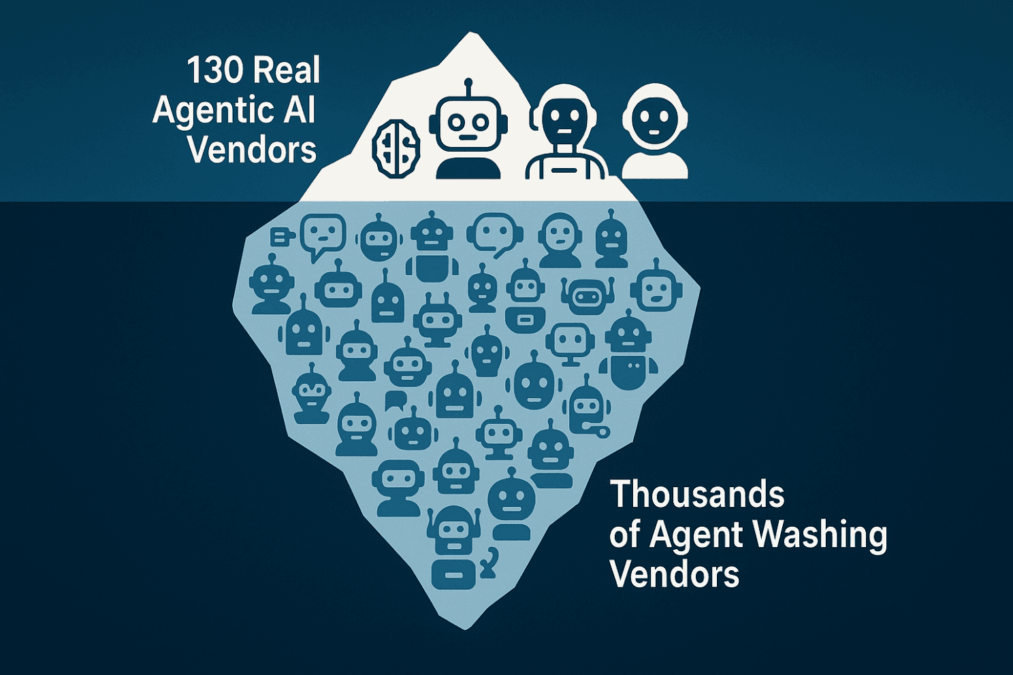
But there is also one other reason behind all this shutdown and that is “Agent washing”. Many companies are rebranding their existing tools, like chatbots or automation bots, without any capabilities. Gartner revealed that only about 130 out of thousands of vendors that offer agentic AI are truly authentic. Verma further emphasized what organizations should actually focus on to gain value from this technology.
She said,
To get real value from agentic AI, organizations must focus on enterprise productivity, not just task automation. It’s about driving business value through cost, quality, speed, and scale.
So don’t go behind the hype or invest blindly. Understand the market and tools before making any move because only the right use cases will survive this wave of experimentation.
Challenges and Ethical Concerns
Even though agentic AI is our future, it’s not without its hurdles. As these systems start thinking and acting more like humans, they create new ethical and operational challenges.
Ethical Governance: When AI systems make decisions on their own, it’s difficult to check every time that the decision is fair and aligned with human values. This is one of the biggest questions right now. Agentic AI must be designed with strong ethical regulations to avoid biased or harmful actions.
Accountability: What will happen when an autonomous AI makes a wrong move? Who takes the blame? The developer, the company, or the AI itself? But there’s no clear answer for now. People believe that the builder company is responsible for that, but there is not any government response to this act yet.
Security and Control: The consequences could be severe if these systems are hacked, manipulated, or behave unpredictably. A survey found that 65% of respondents are worried about AI-related cybercrime. So make sure to check the decisions and permissions to stay safe.
Transparency and Trust: We don’t trust what we don’t understand. So it needs to be transparent to be truly accepted. The company should tell us how it fetches our data and how it makes decisions to build trust.
Conclusion
Agentic AI is going to change every industry, from cybersecurity, supply chain, and healthcare. But we have to keep in mind that it is still growing. It’s suffering from high cost, unclear goals, and security risks now. Although many people are using agentic AI, but with limited features. It is in its early stages and learning right now.
Investors should be careful when making an investment in this growing technology. Although it’s the future, only the companies that move smartly, start small, and focus on solving real problems will lead the way. Adapt to this changing technology over time because the future will belong to those who know how to work with AI, not just use it.
FAQs
1. What’s the difference between Agentic AI and Generative AI?
Generative AI creates things like text, images, or code based on our prompts. Agentic AI doesn’t just create. It plans, decides, and takes actions to complete a goal with minimal human help.
2. Is Agentic AI already available?
Yes, but it’s still in the early stages. Some tools, like OpenAI’s new agent features, Cognition AI’s Devin, and AutoGPT, already show how agentic AI works. But full autonomic agentic AI is still being tested.
3. Will Agentic AI replace human jobs?
Not entirely. Agentic AI will likely change how we work rather than replace everyone. It can handle repetitive or time-consuming tasks to allow us to focus on creativity and decision-making.
4. How can businesses prepare for Agentic AI?
Use agentic AI where it brings clear value like automating tasks or improving workflows. Train teams to work with AI tools and set clear rules for safety and ethics. Companies that plan and start with a small will benefit the most.