How to Access Your Home Server Remotely Without Port Forwarding Using Tailscale
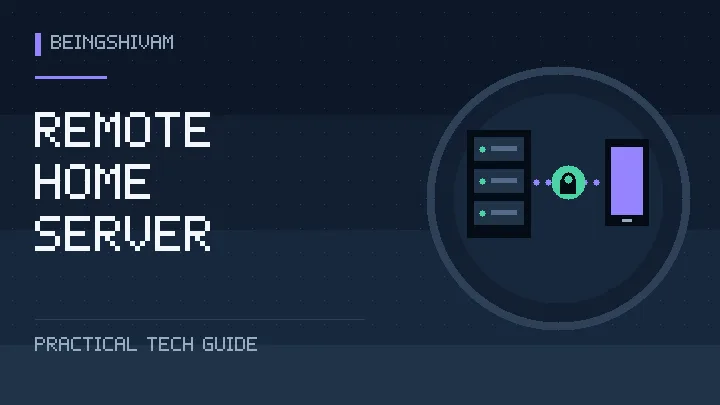
You have a NAS, Jellyfin server or home lab that works on Wi-Fi but becomes unreachable when you leave home. Port forwarding is not always available, especially with carrier-grade NAT (CGNAT), and exposing a private service directly can introduce security risks. Tailscale builds a private network between authorized devices, usually without router port forwarding.
What you need
- A home server that is powered on and connected to the internet.
- A phone or laptop you control, and a Tailscale account.
- A service already working locally, such as Jellyfin on port 8096.
1. Install Tailscale on the server
Use the official installation instructions for your operating system. On Windows, download and install the official client and sign in. For Debian or Ubuntu, follow the official Linux package instructions for your distribution, then run:
sudo tailscale up
tailscale status
tailscale ip -4
Authenticate through the sign-in URL shown by the client. The last command prints the server's Tailscale IPv4 address. It typically looks like 100.x.y.z. This is a private overlay address, not a public website URL.
2. Connect your phone or laptop
Install the official client on the second device and sign in to the same tailnet, or have its owner join through an authorized invitation. On mobile, approve the VPN configuration when prompted. In the device list, verify the server is online.
3. Open the service remotely
On the client, enter your server's actual Tailscale IP and application port in the browser. For example:
http://100.101.102.103:8096This address is illustrative; replace it with your own. MagicDNS can also let you use a device name when configured. Switch your phone to cellular data to confirm remote access. The application must listen on a reachable interface, and its host firewall must allow the appropriate traffic from authorized tailnet peers. Keep the application's own authentication enabled.
4. Troubleshoot when it does not connect
- Check both devices are online and part of the same tailnet.
- Run
tailscale statusandtailscale ping SERVER_NAMEfrom a supported command-line client. - If the peer responds but the website does not, check the application's port, bind address, container port mapping and firewall rules.
- If direct connectivity is unavailable, Tailscale may relay traffic. This can reduce throughput, particularly for high-bitrate video.
5. Secure your private network
Enable MFA on your identity provider, review device membership, keep clients and server software patched and configure access controls to limit who can reach each service. Do not invite users with broad access unnecessarily. Do not expose SMB, databases or admin dashboards publicly. Tailscale provides encrypted transport between peers, but the web application still needs proper authentication; use HTTPS where appropriate.
Do you need a subnet router or exit node?
No, not for a service running directly on a device with Tailscale installed. A subnet router is useful for reaching other devices on a home LAN that cannot run the client. An exit node routes internet traffic through another device and is not needed simply to open a private server.
References
Official Tailscale quickstart | Installation guide | Recent home-server remote access discussion
Engagement
Comments